
 Business License

The Ultimate Guide to Electric Stackers: Choosing the Right Model for Your Warehouse
In modern warehousing, logistics, and manufacturing, optimizing floor space and improving material handling efficiency are vital to operational success. As facilities transition toward narrower aisles and higher vertical storage, traditional forklifts are often too bulky or expensive for daily internal transport.Electric stackershave emerged as the premier cost-effective solution for lifting, stacking, and maneuvering palletized goods in tight spaces.
This guide breaks down the primary types of electric stackers, key selection criteria, and operational benefits to help you choose the ideal equipment for your facility.
1. Primary Types of Electric Stackers
Understanding the structural differences between stacker models ensures you select a machine compatible with your pallet types and layout:
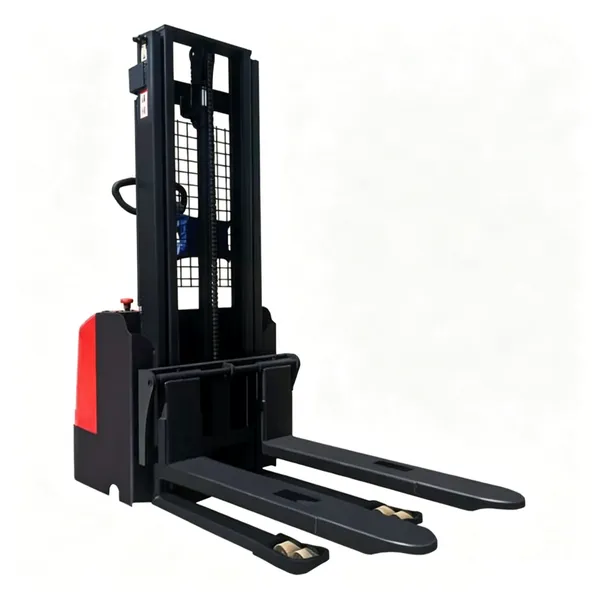
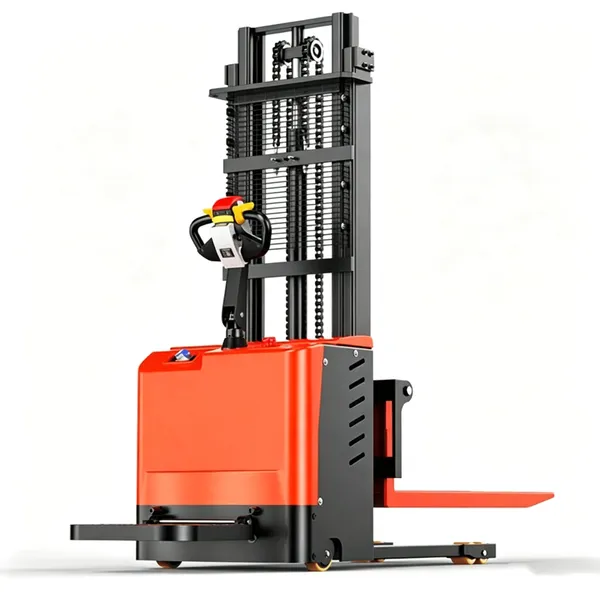
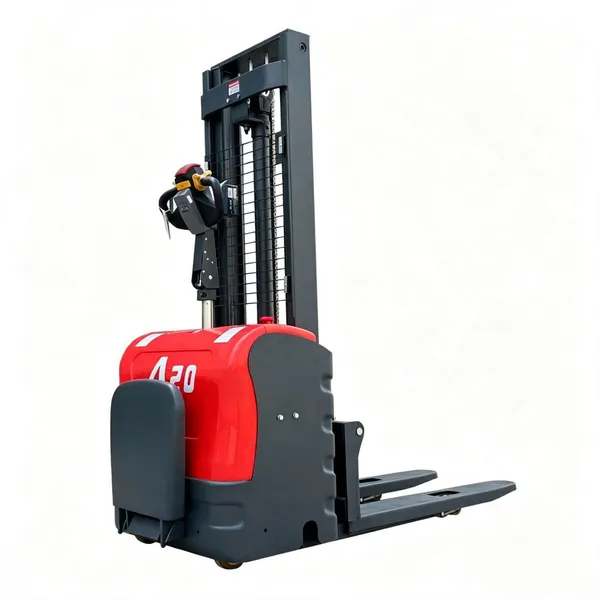
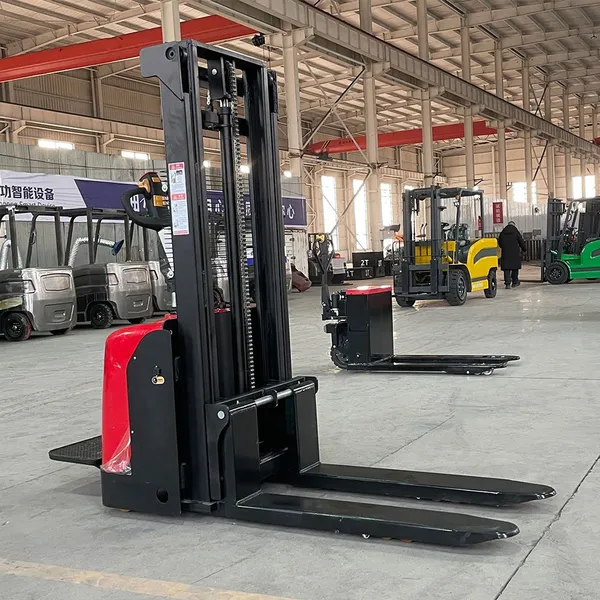
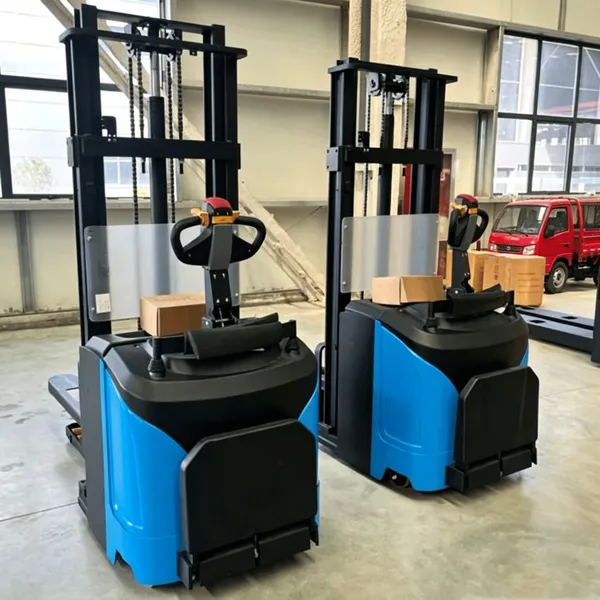
Walkie Electric Stackers: The operator walks behind the unit, controlling motion and lift functions via a tiller handle. Ideal for short-distance transport, low-to-medium throughput environments, and tight storage aisles.
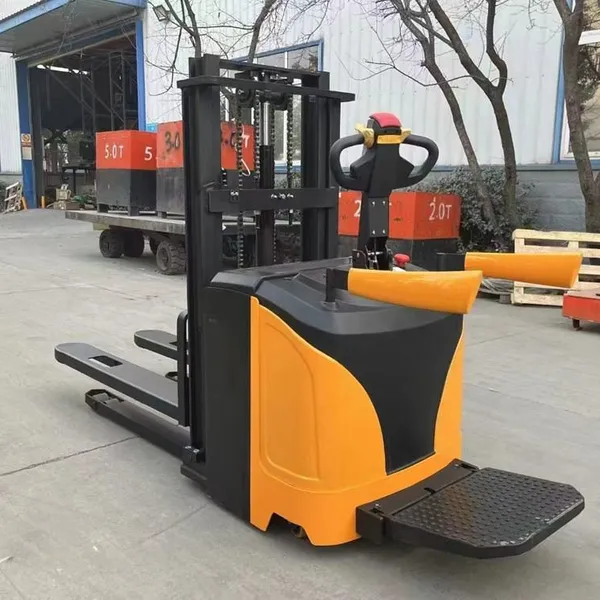
Rider / Platform Electric Stackers: Equipped with a foldable or fixed platform and protective side arms, allowing operators to stand and ride along. Best suited for medium-to-long distance internal transport across large distribution centers.
Straddle Stackers: Feature outer support legs (outriggers) that fit around the sides of a pallet. This design allows the forks to lower directly to the ground, making them ideal for handling closed-bottom pallets (such as standard bottom-board pallets).
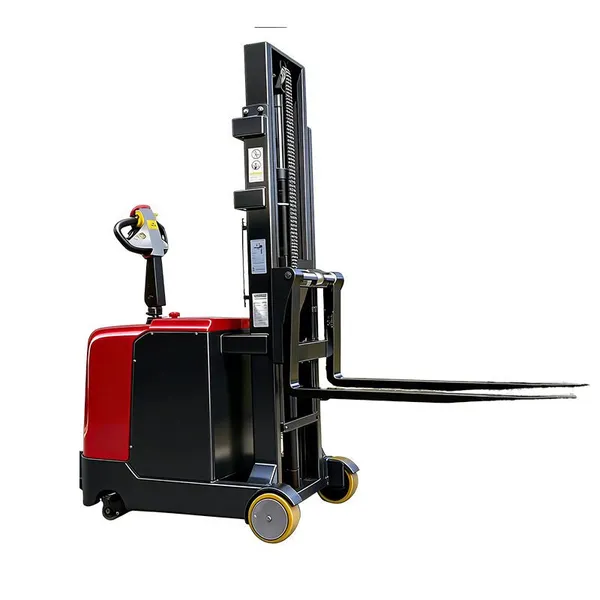
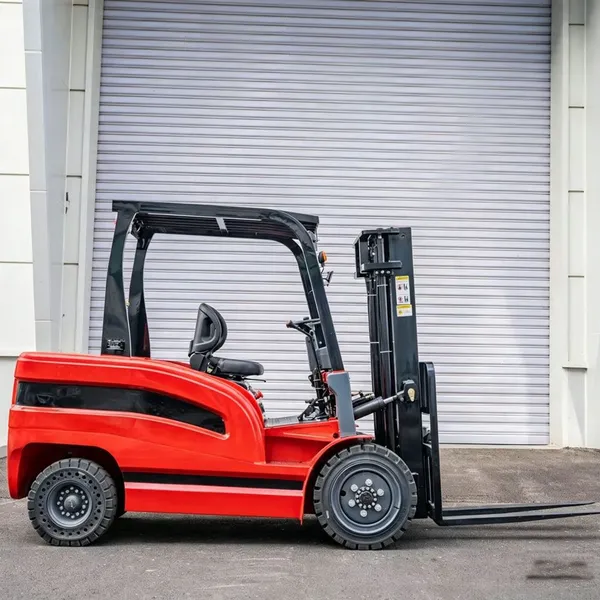
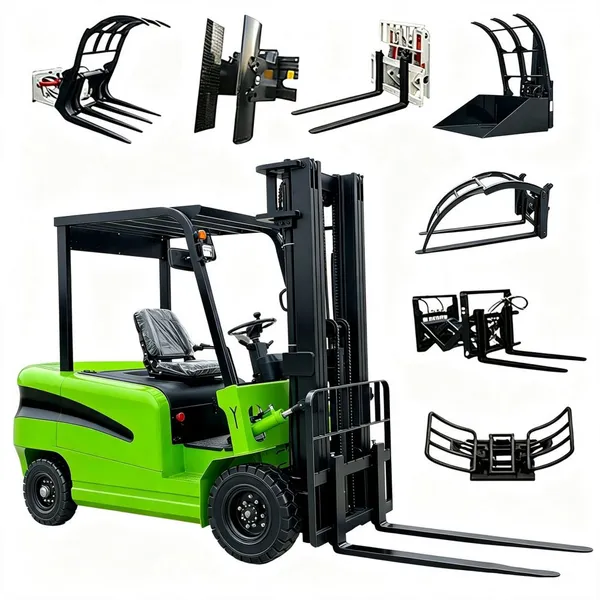
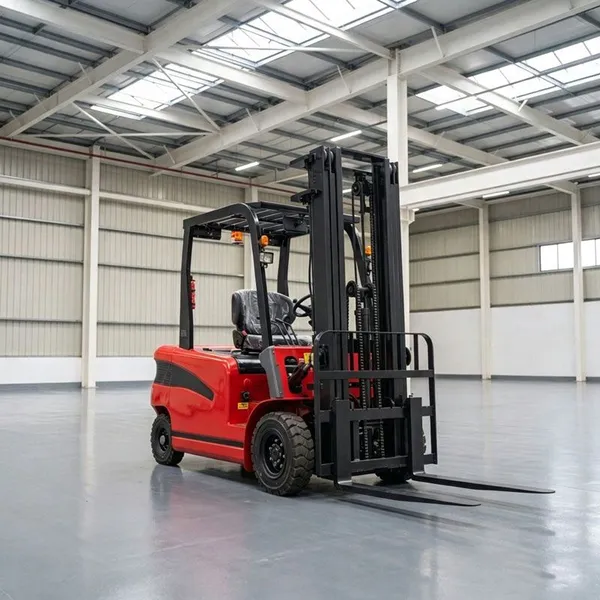
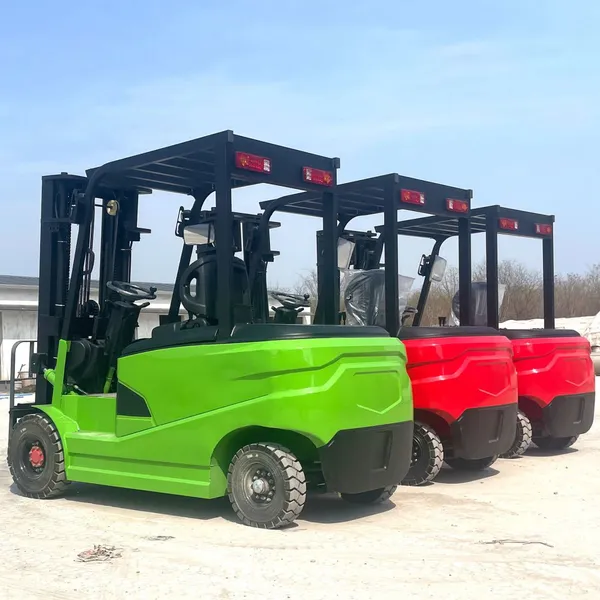
Counterbalanced Electric Stackers: Designed without front outriggers, using an internal rear counterweight instead. They can drive directly up to racks, trucks, or machinery, functioning like a compact forklift.
2. Key Technical Factors When Choosing a Model
| Selection Criteria | What to Measure & Evaluate | Operational Impact |
| Load Capacity | Standard capacities range from $1,000\text{ kg}$ to $2,000\text{ kg}$ ($1\text{ to }2\text{ tons}$). | Always account for your heaviest unit load with a safety margin. |
| Maximum Lift Height | Standard single/double/triple masts reach from $1.6\text{ m}$ up to $5.5\text{ m}+$. | Match the extended mast height to your top rack level while checking door clearance. |
| Pallet & Fork Compatibility | Euro pallets (open bottom) vs. US/Standard pallets (bottom boards). | Determines whether you need adjustable straddle legs or standard wrap-over forks. |
| Aisle Width (AST) | Minimum turning radius required to stack at right angles ($90^\circ$). | Ensures smooth maneuvering without scraping rack uprights or walls. |
3. Power Source: Lithium-Ion vs. Lead-Acid Batteries
Choosing the right battery chemistry impacts both daily productivity and total cost of ownership:
Lithium-Ion Batteries: Support fast opportunity charging during lunch breaks, require zero maintenance (no watering), offer longer cycle life, and maintain steady power delivery until fully discharged.
Lead-Acid Batteries: Lower initial purchase cost, making them attractive for single-shift operations with low daily engine hours. However, they require dedicated charging rooms, longer charge times, and periodic water maintenance.
4. Safety Features & Ergonomics
Modern material handling safety standards require robust operator protections:
Automatic Speed Reduction: Automatically slows travel speed when making sharp turns or when the platform is elevated.
Emergency Reverse Button & Brake: Located on the tiller head to prevent operator pinning accidents in narrow aisles.
Ergonomic Controls: Dual-handed controls, proportioned lifting switches, and clear mast visibility reduce operator fatigue during long shifts.
Recently Posted
-
A Complete Maintenance Checklist to Extend Your Scissor Lift’s Lifespan
September 18, 2026Scissor lifts are indispensable aerial work equipment widely used in construction, municipal maintenance, warehouse logistics, and Read More
 -
Rough Terrain Crawler Scissor Lifts: The Ultimate Solution for Outdoor Work
September 18, 2026Traditional aerial work equipment often struggles with complex outdoor construction environments, such as uneven ground, muddy roa Read More
 -
Electric Stacker vs. Manual Stacker: Which Is Right for Your Business?
September 17, 2026In warehouse operations, material handling equipment plays a pivotal role in maintaining workflow, ensuring worker safety, and opt Read More
 -
Top Safety Rules Every Operator Must Know When Using a Scissor Lift
September 17, 2026Scissor lifts are indispensable aerial work platforms (AWPs) across construction, facility maintenance, and industrial warehousing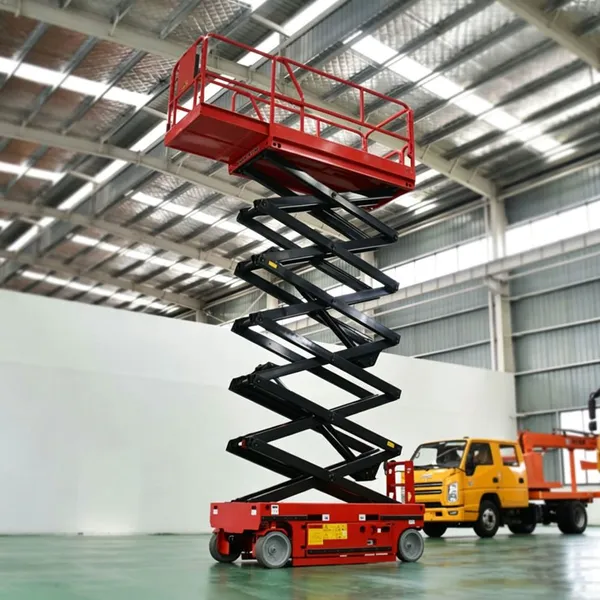 Read More

Contact Us
Recommended Products
-
 Full Electric Forklift 1 Tons 1.5 Tons Stacker Two-Stage Mast Lead-Acid Battery Solid Tire Cheap Manufacturers DirectNegotiableMOQ: 1 Piece
 -
New Stand-on Type Electric Pallet Stacker Forklift 3 Ton Load Capacity 3m-5.5m Lifting Height 1 Year WarrantyNegotiableMOQ: 1 Piece
-
New Heavy Duty 1500kg-2000kg Electric Stacker Forklift Pallet Truck Lithium-Ion DC Drive Warehouse Logistics Retail RestaurantNegotiableMOQ: 1 Piece
-
2t 2.5t 3t Heavy Stacker Forklift Electric Stacker Legless Counterweight All-electric Forklift TruckNegotiableMOQ: 1 Piece
-
2026 Bestselling Full Electric Stacker 1500kg 2Ton 3M 4M 4.5M Battery Operated Pallet Stacker Indoor Stacking HandlingNegotiableMOQ: 1 Piece

-
3 Ton Electric Forklift Heavy Duty Warehouse Forklift Lithium Battery Durable Multi-function Design Factory WholesaleNegotiableMOQ: 1 Piece
-
Electric Forklift 1 Ton 1.5 Ton 2 Ton 3 Ton CE MSDS Lithium Battery Four Wheel Drive Forklift Diesel Rough TerrainNegotiableMOQ: 1 Piece
-
Electric Forklift 3 Ton 5 Ton Forklift Farm Forklifts Lithium Battery 3000-6000mm Lifting Height Hydraulic Fork Lift TruckNegotiableMOQ: 1 Piece
-
Fast Delivery ELECTRIC FORKLIFT 3 Tons Lifting 3m Pallet Cargo Warehouse Montacargas ElectricoNegotiableMOQ: 1 Piece
-
Fully Automated Scissor Lift Platform Mobile Scissor Lift Platform 6m 8m 10m 12m With Aerial Work PlatformNegotiableMOQ: 1 Piece
-
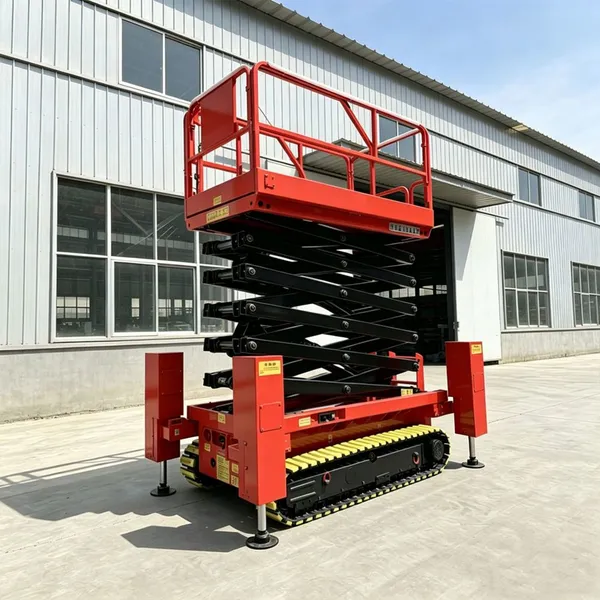
4m-12m Tracked Self-propelled Aerial Work Platform Lift Electric Rough Terrain\/crawler Scissor LiftNegotiableMOQ: 1 Piece
-
High Strength Steel Sissor Lift 2.2kW 8m 10m 12m 16m Aerial Work Platform Electric Mobile Hydraulic Scissor Lift ManliftNegotiableMOQ: 1 Piece
-
High Quality 6m 8m 10m 12m 14m Electric Scissor Lifts Hydraulic Electric Aerial Work Platform for SaleNegotiableMOQ: 1 Piece
-
Capacity 450kg 6m 8m 10m 12m 14m Aerial Work Platform Mobile Electric Scissor LiftNegotiableMOQ: 1 Piece
-
Full 1/1.5/2/2.5/3 Ton Forklift Electric Stacker Walkie Type Apilador Electrico 1.5/2/2.5 ToneladasNegotiableMOQ: 1 Piece
-
Electric Stacker Better Energy Consumption Hydraulic System 2ton 3m Forklift Truck Cheap Sale Factory PriceNegotiableMOQ: 1 Piece
-
1t 3t 5t Standing Type Heavy Duty Full Electric Pallet StackerNegotiableMOQ: 1 Piece
-
China 60V 3.5 Tons 5 Tons Small Electric Forklift Price Battery Forklift Electric Forklift for SaleNegotiableMOQ: 1 Piece
-
Affordable Container Electric Forklift Stacker for Efficient Pallet Handling Battery Forklift Warehouse ForkliftNegotiableMOQ: 1 Piece
-
Chinese 2.5t 3 Ton 3.5t 4ton 5 Ton 7 10 T Electric Diesel Gasoline LPG Rough Terrain Fork Lift Truck Parts Warehouse ForkliftNegotiableMOQ: 1 Piece